

Insulin resistance doesn’t happen overnight. It develops slowly, often over years, and most people don’t realise it’s happening until symptoms appear. So, what causes insulin resistance? Read on:
The problem is that many explanations focus on just one cause, usually sugar or carbs, when in reality, insulin resistance is driven by a combination of lifestyle, diet, and metabolic factors working together.
Understanding the real causes of insulin resistance is the first step to fixing it.
If you’re not sure whether you have it, start here: How to Know If You Have Insulin Resistance
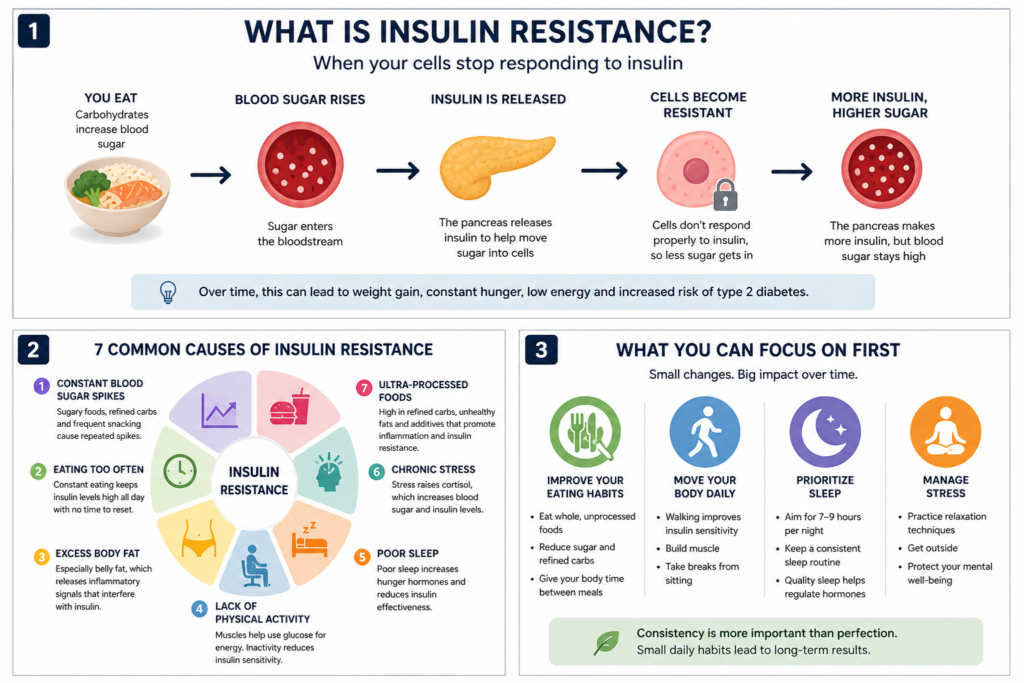
What is insulin resistance (in simple terms)?
Insulin is a hormone that helps move glucose (sugar) from your blood into your cells, where it can be used for energy.
Insulin resistance happens when your cells stop responding properly to insulin. As a result, your body produces more insulin to compensate.
Over time, this can lead to:
- Constant hunger
- Fat storage (especially around the stomach)
- Energy crashes
- Eventually, rising blood sugar levels
If you want a deeper explanation, read the What is Insulin Resistance page
The real causes of insulin resistance
There isn’t just one cause. It’s usually a combination of the following factors.
1. Constant blood sugar spikes
Frequent spikes in blood sugar force your body to release insulin repeatedly throughout the day.
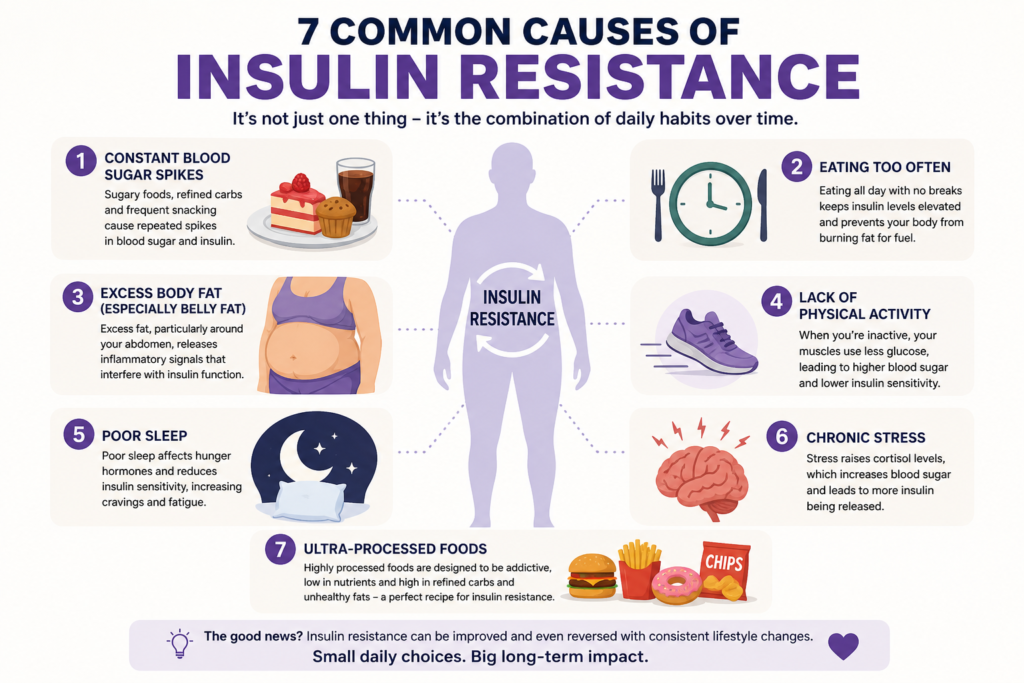
This often comes from:
- Sugary foods and drinks
- Refined carbs (white bread, pasta, cereals)
- Snacking constantly
Over time, your body becomes less sensitive to insulin.
2. Eating too often (no breaks for your body)
Many people eat every few hours without giving their insulin levels a chance to drop.
This means:
- Insulin stays elevated all day
- Fat burning is reduced
- Cells become less responsive over time
3. Excess body fat (especially around the stomach)
Fat tissue, particularly visceral fat, plays a direct role in insulin resistance.
It releases inflammatory signals that interfere with how insulin works in the body.
4. Lack of physical activity
Muscle plays a key role in using glucose.
If you’re inactive:
- Less glucose is used for energy
- More stays in the bloodstream
- Insulin levels rise to compensate
Even simple daily movement makes a difference.
5. Poor sleep
Sleep is often overlooked, but it has a direct impact on insulin sensitivity.
Poor sleep can:
- Increase hunger hormones
- Reduce insulin effectiveness
- Lead to cravings and overeating
6. Chronic stress
Stress raises cortisol levels, which increase blood sugar levels.
This leads to:
- More insulin is being released
- Greater strain on your system
- Increased fat storage
7. Ultra-processed foods
Highly processed foods are designed to be:
- Easy to overeat
- Low in nutrients
- High in refined carbs and fats
Why most people get this wrong
Many people are told that insulin resistance is just about eating too much sugar.
But the reality is:
It’s the combination of habits over time that causes the problem
- Frequent eating
- Low movement
- Poor sleep
- Chronic stress
These all work together.
Can insulin resistance be reversed?
In many cases, yes.
The body is highly adaptable when you reduce the pressure on your system; insulin sensitivity can improve.
If you want a practical starting point, read: What’s the Fastest Way to Reverse Insulin Resistance
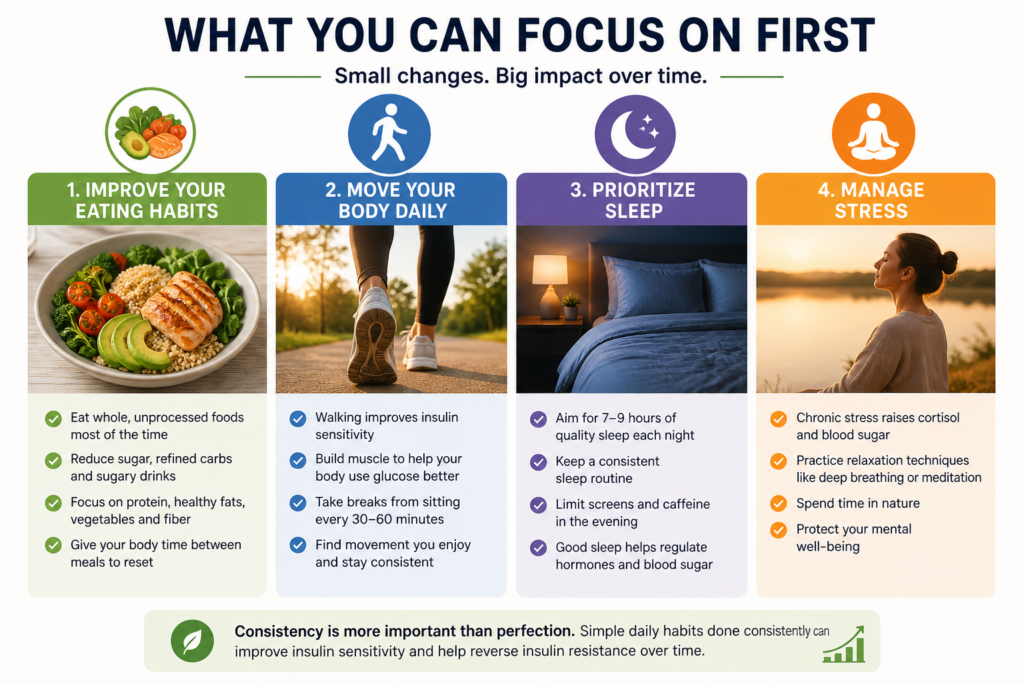
What should you focus on first?
Instead of trying to fix everything at once, focus on:
- Reducing constant snacking
- Improving food quality
- Moving more during the day
- Getting consistent sleep
Next step: understand your symptoms and testing
If you think insulin resistance might already be affecting you, the next step is to understand:
- The symptoms
- The tests that can confirm it
Start here:
Frequently asked questions
What causes insulin resistance?
There isn’t a single cause. Insulin resistance usually develops from a combination of factors, including frequent blood sugar spikes, lack of physical activity, excess body fat, poor sleep, and chronic stress.
Can eating sugar cause insulin resistance?
Sugar on its own isn’t the only cause, but frequent consumption of sugary and highly processed foods can lead to repeated blood sugar spikes, which may contribute to insulin resistance over time.
Can stress cause insulin resistance?
Yes. Chronic stress increases cortisol levels, which can raise blood sugar and lead to higher insulin levels. Over time, this can reduce insulin sensitivity.
Can insulin resistance be reversed?
In many cases, insulin resistance can improve with consistent lifestyle changes such as improving diet, increasing physical activity, getting better sleep, and reducing stress.
How long does it take to reverse insulin resistance?
This varies from person to person. Some people notice improvements in a few weeks, while for others it may take several months of consistent changes.
Explore more insulin resistance guides
Below you’ll find more articles covering symptoms, testing, and practical strategies to improve insulin sensitivity.